What the growth corridor left standing
Powdersville sits in one of Anderson County's fastest-growing corridors, the stretch between Greenville and Anderson where farmland and second-growth woodland became subdivisions within recent memory. Builders cleared most of it, but trees that made lots look established got left in place: mature white oaks with broad crowns, loblolly pines that were decades old when the cul-de-sac was poured, tulip poplars whose canopies had closed over what used to be a fence row. Many of those trees are now growing over rooflines, driveways, and utility lines that were not there when they took root.
That changes the job. A tree that grew in a forest develops a root system shaped by competition and consistent canopy support; pull the surrounding trees away and that same specimen faces full wind load it was never hardened to carry alone. Add construction grading that cut lateral roots on one or two sides to make room for a foundation, and the structural picture shifts quietly for years before it shows above ground. The defining Powdersville removal job is a tree that looks solid, leans toward a structure, and has no trimming or inspection history to review. For those jobs, an in-person assessment before any number is not a sales tactic — it is the only honest way to scope the work. See the full tree removal service page for what a complete job scope covers.
Cost ranges for Anderson County removal work
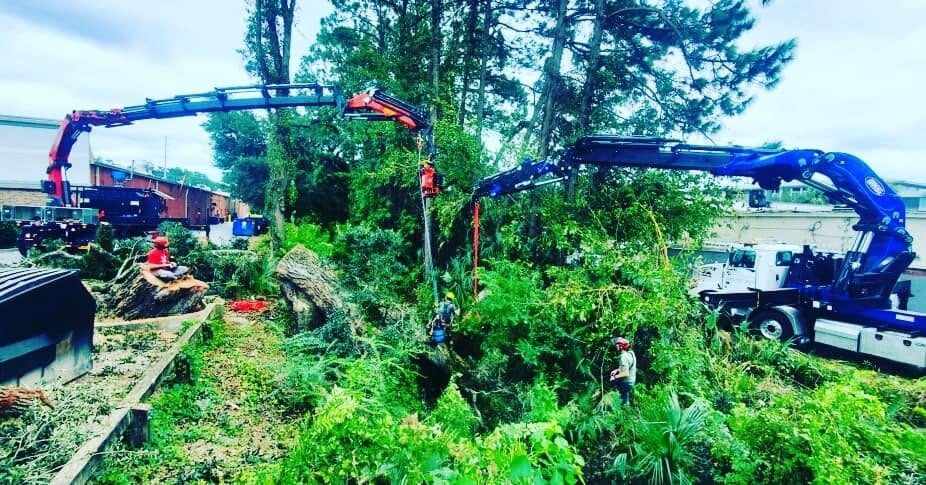
Most jobs in this area break down by size and access. A small ornamental or understory tree in an open backyard is a straightforward half-day job; a 70-foot pine hanging over a newer construction roof requires rigging, aerial equipment, and a full crew working in sections from the top down. The table below gives working ranges; the full set of variables is in the tree removal cost guide.
| Scope | Typical Range |
|---|---|
| Small tree (under 30 ft) | $300–$600 |
| Medium tree (30–60 ft) | $600–$1,200 |
| Large tree (60+ ft) | $1,200–$2,000 |
| Hazard or tight-access job | $1,500–$3,000+ |
| Stump grinding (per stump) | $100–$350 |
Stump grinding is typically a separate line item; it clears the root mass, allows replanting, and removes the tripping hazard that a flush-cut stump leaves behind. The stump grinding page covers what the process includes and what to expect for access and turnaround. For jobs involving multiple trees or a mix of removal and grinding, ask for a combined scope rather than scheduling them separately.
Storm load in Upstate SC
Anderson County accumulates storm damage in ways the weather map does not always telegraph. The Upstate SC corridor sits at the edge of several storm tracks: late-season tropical remnants that arrive as weakened depressions after tracking inland, summer derecho lines that push southeast across the Piedmont, and winter ice events that load pine canopies until the crown fails all at once. Anderson County has recorded 18 federal disaster declarations over 2005-2026, most of them storm or flood family. After each significant event, the removal backlog builds fast, which matters for scheduling priority calls.
The SC Forestry Commission documents timber damage from significant storm events statewide and publishes guidance on assessing residual hazard trees after major events, a useful reference when evaluating a tree that showed no visible damage but may have suffered root zone disruption. For the forecast picture, the NOAA National Weather Service Greenville-Spartanburg office covers Anderson County; their ice storm and high-wind watches are the most reliable early warning for when removal backlogs will build in this zip code.
Hiring right for a Powdersville job
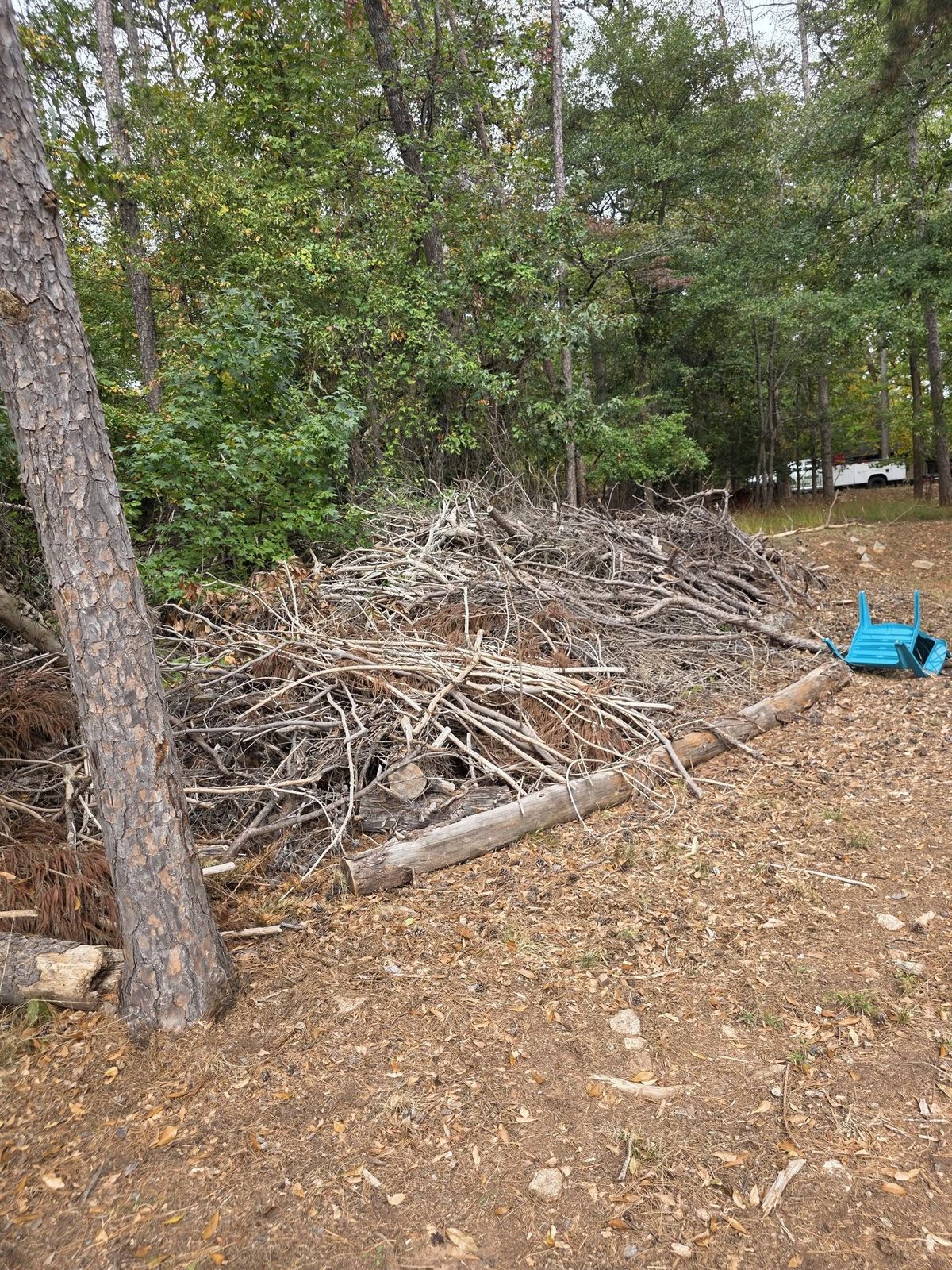
South Carolina requires contractor licensing for certain types of specialty contracting work; the SC LLR Contractor Licensing Board is the authority on what threshold applies and how to verify a license before you sign anything. Beyond the license check, three questions separate experienced crews from the ones that cause problems: Does the crew carry current liability and workers' compensation coverage for everyone on the ground? Have they worked tight-access suburban lots similar to the ones common in newer Powdersville developments, where root systems run under driveways and canopies overhang neighboring structures? And how do they handle debris — full-service jobs include haul-away, but some bids price it separately or leave it out of the quote entirely.
Arborist certification, such as ISA credentials, is a reasonable ask on any job involving a hazard assessment or a tree with a non-obvious structural problem. It is not a legal requirement in South Carolina, but it reflects whether the crew has training beyond operating equipment. For any work involving a tree that has already partially failed, or where the removal path runs directly over a structure, that credential is worth the extra conversation.
Dead, declining, or just stressed
Not every Powdersville call ends in removal. The legacy trees left by developers are often stressed rather than dying; they show thinning crowns in the upper canopy, epicormic shoots clustered near the base, or bark damage from construction equipment that cleared a little too close. Those are conditions worth a qualified assessment before the removal call is scheduled. The Clemson Cooperative Extension Home & Garden Information Center publishes species-specific diagnosis guides for Upstate SC trees, a solid starting reference for what normal decline looks like versus active structural failure.
Removal is the right answer when trunk decay has reached the structural root zone, when a partial failure has created a hanging section that can drop without warning, or when a measured lean toward a structure has advanced noticeably within a single growing season. Stressed trees that remain structurally sound can often be managed with selective pruning for years at a fraction of full removal cost — without losing the canopy coverage and property value the tree provides.