Slope, clay, and old canopy — what Easley lots actually require
Easley sits at the transition where Pickens County's rolling Piedmont terrain begins climbing toward the Blue Ridge foothills — which means the trees here have spent decades rooting into shallow clay over decomposed granite on ground that rarely holds a flat grade. Neighborhoods built along the SC-123 and SC-153 corridors in the mid-twentieth century grew water oaks, tulip poplars, and Southern red oaks over houses that were never designed with hundred-foot crowns in mind. That combination — heavy hardwood, sloped lot, structure in the fall zone — is what makes tree removal in this market a different conversation than the same species on flat ground in the Greenville metro twenty miles east.
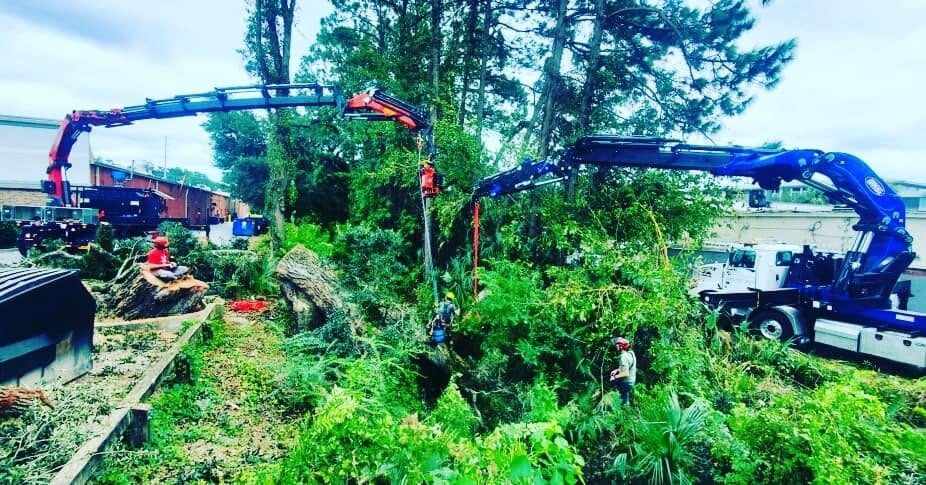
The slope complication is not just about steepness. When a tree cannot be felled in a single straight drop, every limb inside the fall arc has to come out by rope and rigging before the final cut. That is skilled work, it takes time, and it belongs in the estimate from the start. The SC Forestry Commission recommends professional assessment before removal on any property where root-plate stability cannot be confirmed by visual inspection — in Pickens County's foothill soils, that covers a larger share of jobs than most homeowners expect. A quote written without walking the site is working from assumptions that your lot may not share.
What tree removal typically costs in Easley
Pricing in this market tracks tree size, access corridor, and what occupies the fall zone. The ranges below are typical Upstate SC figures for the Easley area — not a quote from Tree Wisemen. Every job within 50 miles of Easley receives a free on-site estimate before any number is committed. See the full tree removal cost guide for a line-by-line look at what moves a job up or down inside these bands.
| Scope | Typical Range |
|---|---|
| Small tree, open drop zone (under 25 ft) | $300–$550 |
| Medium tree, standard access (25–55 ft) | $550–$1,100 |
| Large hardwood, rigging required (55–80 ft) | $1,100–$1,900 |
| Hazardous, confined, or over-structure tree | $1,500–$2,000; large hazards can pass $3,000 |
| Stump grinding (add-on after removal) | see stump grinding for ranges |
Two local cost drivers specific to Easley: slope access routinely adds rigging and labor hours that flatland quotes omit, and the rocky clay substrate in Pickens County puts real wear on stump grinding equipment, which shows up as a genuine line item on most bids. Any quote written without a site visit is working from guesses about access, crown load, and root conditions that only the property itself can answer.
Upstate storms and the compressed timeline they create
Pickens County has accumulated 23 federal disaster declarations over 2005-2026, most of them tied to severe weather that moves through the Upstate's foothill corridor with less warning than the open Piedmont gets. The NOAA National Weather Service classifies this region in an active corridor for severe thunderstorms and straight-line wind events; Upstate winters also bring periodic ice loading that mid-century hardwoods — water oaks and tulip poplars especially — were not selected to handle. Ice adds crown weight fast, and species that grow quickly in Pickens County's humid growing season often have wood density that reflects that speed.
The aftermath is what creates the most difficult calls. A tree that passed a visual inspection before a wind event may have opened internal cracks or shifted its root plate on the uphill side without any sign visible at ground level. Post-storm assessment belongs before the cleanup crew arrives, not after, because a compromised tree can fail during removal if the first cut is made without reading the new structural picture. Emergency situations — active lean, crown over a structure, blocked access — move to priority scheduling. Flag your timeline and include photos when you request an estimate; the more information available before the first visit, the faster the response.
What to watch and when to act — Pickens County tree signals
Not every declining tree in Easley is an emergency, and not every emergency announces itself with obvious damage. The failures that cause injury in this county tend to follow a quieter pattern: a co-dominant stem that developed included bark over twenty years before finally splitting, a root plate that heaved incrementally each wet winter before the uphill side gave out, a cavity at a primary branch union invisible from street level. The Clemson Cooperative Extension publishes practical guidance on tree failure indicators — dead wood in the upper crown, fungal growth at the root flare, significant lean with soil disturbance — that any homeowner can use as a first screen between professional assessments.
The Upstate's long humid growing season amplifies the risk. Canopy mass grows substantially between April and October; a crown that was well-distributed in spring can carry noticeably more weight on one side by the time fall wind loads arrive. Any tree you are actively watching is worth a qualified second opinion at the end of the growing season before it goes into winter. For trees you have already decided on, the removal service page explains what a qualified crew should cover on the first visit and what questions to bring to that conversation.
Licensing, insurance, and the right questions before a crew starts
SC does not issue a standalone arborist removal license, but tree work above applicable value thresholds falls under general contractor licensing requirements enforced by the SC LLR Contractor Licensing Board. The more immediately practical requirement is simpler: ask for a certificate of general liability and workers' compensation before anyone sets foot on your property with a chainsaw. Storm-recovery markets attract uninsured crews working from pickups, and a worker injury on your lot without that documentation in place creates liability you did not plan for.
The questions worth asking any crew before work begins: Do they carry current liability and workers' comp? Have they rigged removals over structures on sloped lots in Pickens County's foothill terrain? Does the quote include debris cleanup and haul? After the tree comes down, stump grinding is worth including in the same visit. Left in place, water oak and tulip poplar root systems in this county's clay will sprout aggressively through a surface cut, and the root plate can interfere with replanting, hardscape, and lawn equipment for years. Including it in the original scope almost always costs less than scheduling it as a separate job later.