Why the Blue Ridge escarpment changes how storms drop trees in this county
The western edge of Pickens County runs along the Blue Ridge escarpment — Table Rock, Sassafras Mountain (the highest point in South Carolina), the approach to the Jocassee Gorges corridor. That topography acts as a ramp. Afternoon thunderstorms that build over the mountains can accelerate as they descend into the Piedmont, hitting communities like Easley, Liberty, and Central with localized wind shear that arrives faster than any neighborhood-level warning. Residents backed up against lower ridges often assume they are sheltered. Storm records say otherwise.
This is fundamentally different from storm cleanup on the SC coast, where tropical systems arrive with hours of advance notice and load soil with moisture over days before trees fail. Here, a single afternoon cell can shear mature hardwoods on one block while leaving the next untouched — a pattern the NOAA National Weather Service Greenville-Spartanburg office tracks for this specific transition zone, where escarpment-to-Piedmont gradients make cell intensity difficult to forecast at the neighborhood level.
The practical result: cleanup after an Upstate storm is reactive and compressed. Utilities go down, access roads block with debris, and multiple crews field calls at the same hour. Pickens County's mix of residential lots backed against mature hardwood woodland — particularly along the Jocassee Gorges corridor — makes structural damage from falling trees a recurring risk, not a once-a-decade event. The SC Forestry Commission tracks storm impacts on forest resources statewide; Pickens County has seen 23 federal disaster declarations over 2005-2026, a record that reflects what this terrain does to storm intensity.
The order of work after a tree comes down
Storm cleanup runs in a defined sequence. Understanding it protects you from paying for work that was skipped or done out of order:
- Hazard assessment before any cutting. A qualified arborist identifies what the tree is contacting, what it is threatening, and whether power lines are involved. A tree on an energized line is a utility call before it is a tree call — no legitimate crew cuts around live wire.
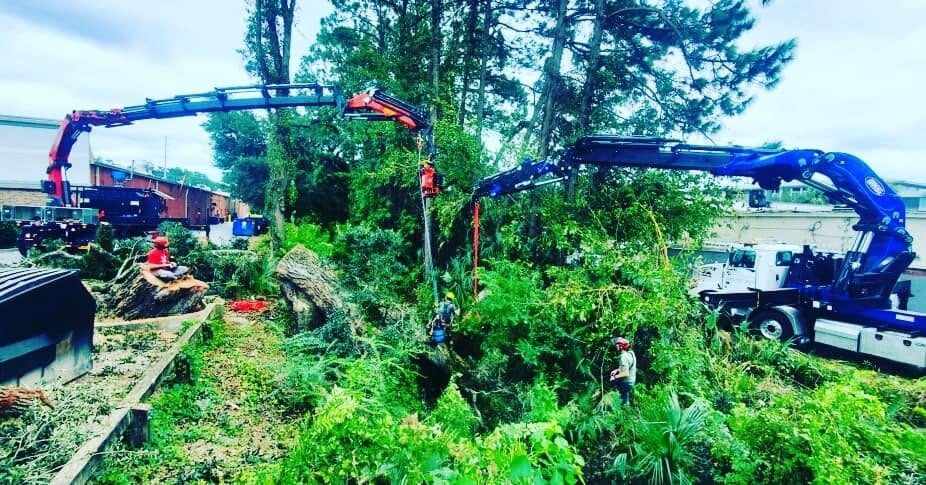
- Structural cut and controlled drop. On a tree pinning a structure, the first cuts are sequenced to relieve tension without adding damage. The angle of lean, crown load distribution, and root ball condition all shape the cut order. This is not speed work.
- Limb removal and trunk sectioning. Once the crown is neutralized, the trunk sections from the top down. Logs may be cut to length for the customer's use or staged for removal.
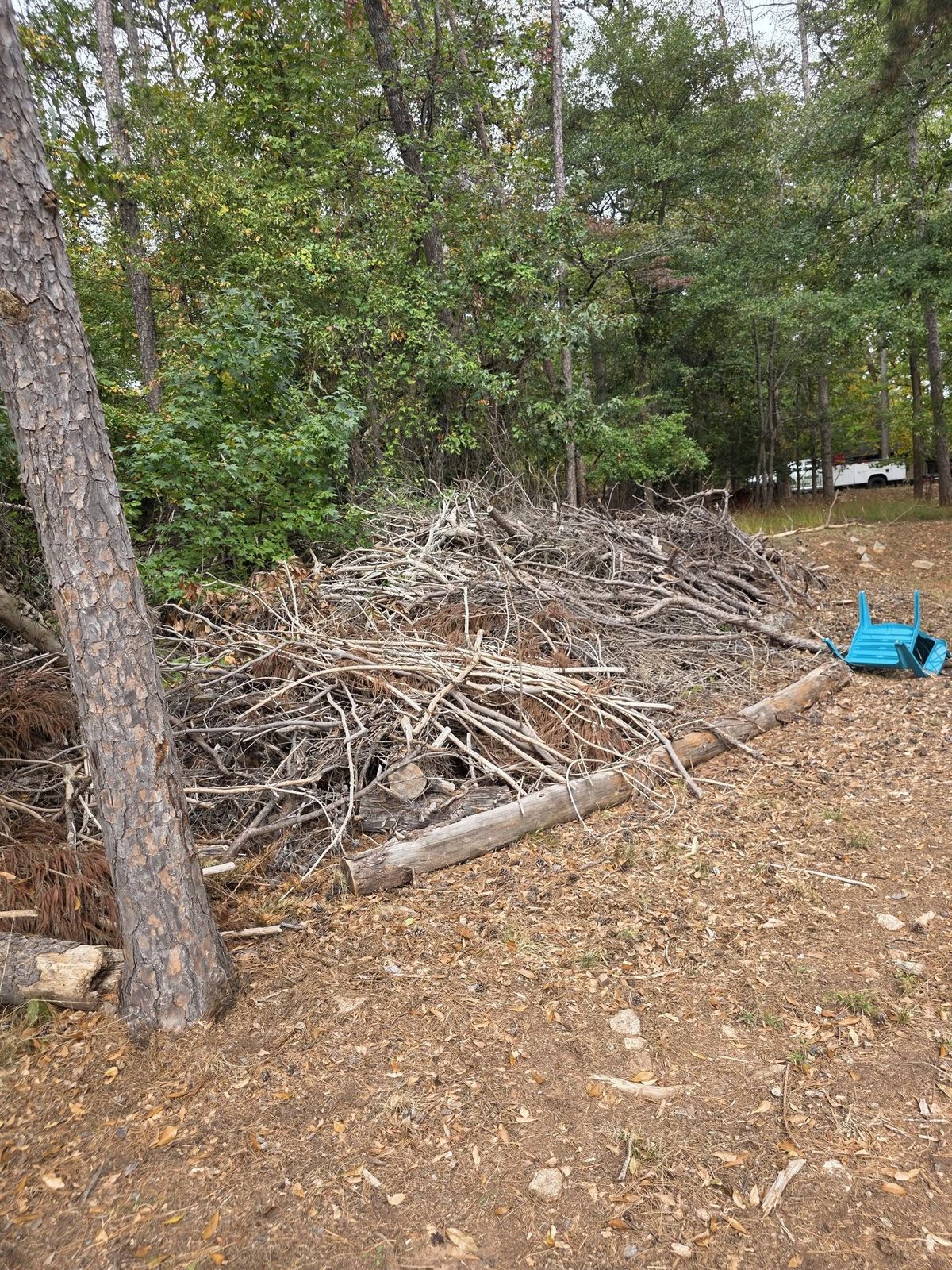
- Debris removal and haul. This is a distinct scope with its own pricing. Some customers keep split wood for firewood; most want clean ground. See debris hauling for what full-site removal involves and what it typically costs separately from the tree work itself.
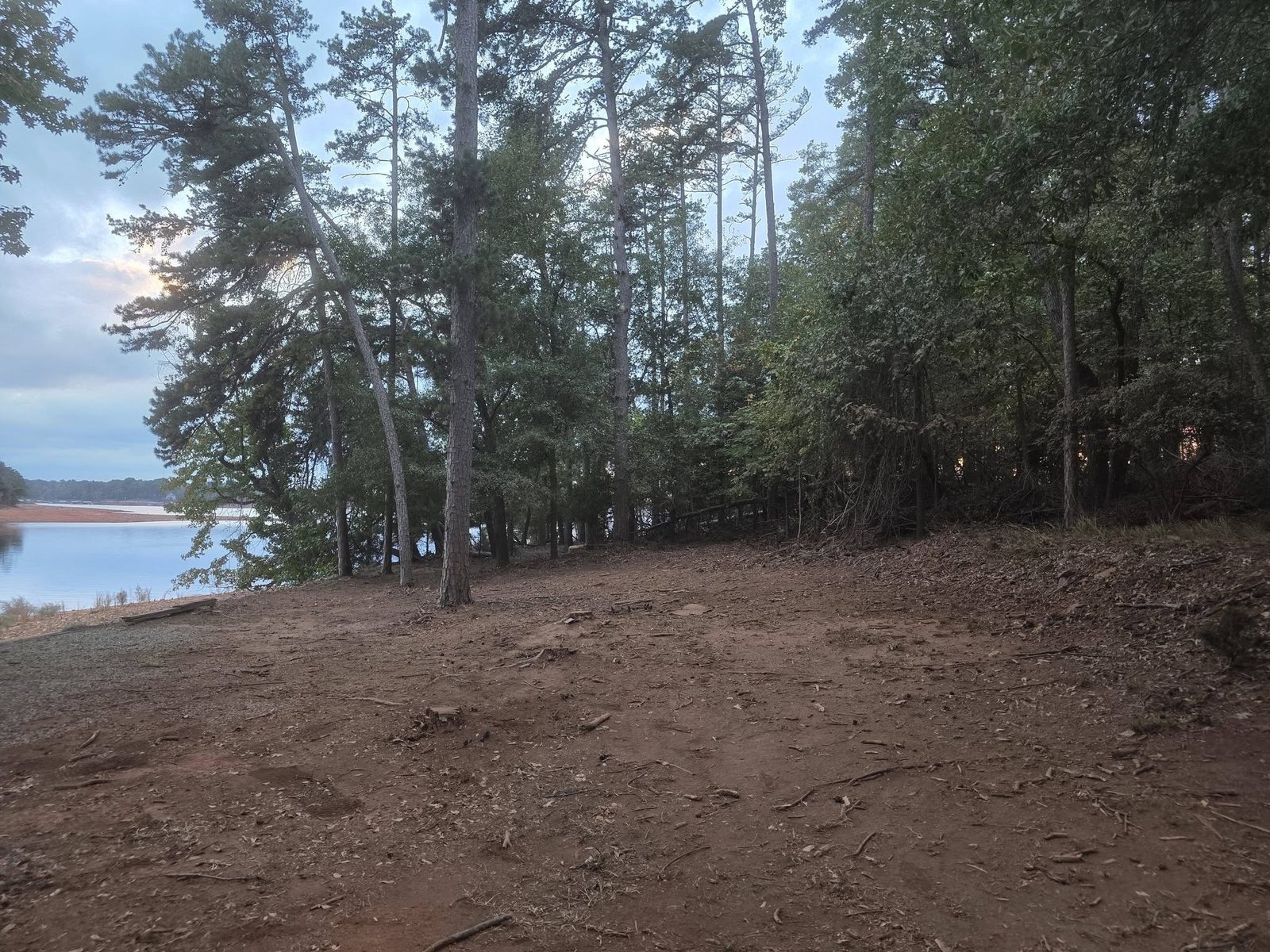
- Final site walk. A crew that leaves without walking the perimeter is leaving the next problem for the next storm. Stump condition, residual leans on adjacent trees, and disturbed drainage are worth noting before the job closes.
What storm cleanup costs and what moves the number
Emergency and storm work in Upstate SC prices above standard removal for a simple reason: crews mobilize at odd hours, into blocked access, with no advance site knowledge. The scope table below reflects typical ranges for jobs fielded after a storm event in Pickens County:
| Scope | Typical Upstate SC Range |
|---|---|
| Emergency call, single tree on open ground | $500–$1,200 |
| Tree pinning a structure (roof, fence, vehicle) | $1,000–$2,500 |
| Large hardwood (oak, hickory) with complex crown | $1,200–$3,000 |
| Multiple trees, same property, single mobilization | $800–$2,500 per tree (blended rate) |
| Debris-only haul after self-cleared storm damage | See debris hauling |
The numbers above assume a single-tree mobilization. Multiple trees on the same property in one visit share that mobilization cost, which is why comprehensive post-storm cleanup often runs lower per tree than a series of individual emergency calls.
What moves the number most: hazard level (a tree pinning a structure is not the same job as one on open ground), the hour and day of the call, site access constraints (can a chip truck reach the work?), and total debris volume. Tree Wisemen prices every job after a free estimate — the figures here are regional ranges, not a quote.
When the tree came from the other side of the property line
South Carolina property law on this question tends to surprise homeowners: a healthy tree that falls during a storm is generally the receiving property owner's problem to clean up, not the tree's owner. Neighbor liability typically attaches only when the tree was visibly dead, diseased, or structurally compromised before the storm — and the neighbor had been notified in writing. That cuts both ways: a dead tree leaning toward your neighbor's house is your exposure when it comes down in the next event.
Pickens County's character — large lots, mature hardwood canopy, and neighborhoods in transition from rural to suburban — means the same event that drops one tree often damages canopy on three adjacent properties. Sorting out who owes what can stall cleanup when everyone needs to move fast.
The full SC rules, documentation steps, and what to do when the two properties can't agree are covered in detail on this site. The practical advice before the next storm: if a neighbor's tree shows dead wood and is angled toward your structure, document it in writing to that neighbor now. That letter matters far more after the fact than before it.
What to verify before any crew starts cutting on your property
After a major storm, contractors from out of the area arrive without SC credentials. A crew working without required licensing shifts injury liability to you if someone is hurt on your property. South Carolina requires tree service contractors meeting certain thresholds to hold a license through the SC LLR Contractor Licensing Board — ask for the license number before work starts, and verify it. This is worth the two minutes it takes.
If the cleanup involves chemical stump treatment, the applicator must hold a SC pesticide applicator license issued through Clemson University's Department of Pesticide Regulation. This check rarely occurs to homeowners in the middle of a storm recovery, but it is the right one to run before agreeing to that scope of work.
Insurance verification is equally non-negotiable: request a certificate of insurance naming you as an additional insured before cutting begins. A crew that cannot produce one on short notice is not operating at the level the work requires. When the response window is tight and you need a vetted crew quickly, emergency tree service covers what to tell a dispatcher and what to expect during the first hour on site.