What Piedmont clay does to this job
Greenville County sits in the South Carolina Piedmont — the band of dense, slow-draining clay upland that separates the coastal plain from the Blue Ridge foothills. That clay changes stump grinding in ways that a Lowcountry quote or a mountain quote won't tell you. Root systems in Piedmont clay don't decompose quickly or spread loosely; they stay compressed and dense long after the tree is gone. A stump that looks small at grade often anchors a wide, tight root plate that slows the grinder and produces a larger chip pile than the surface diameter suggested.
The tree stock compounds it. Mill village neighborhoods in and around Greenville — Brandon, Judson, Poe — carry century-old water oaks and willow oaks with stumps that run wide at the base. Newer county subdivisions mixed in sweetgum as a fast-growing shade tree for decades; it's now one of the most common removal calls in the Upstate. The SC Forestry Commission identifies sweetgum as a prolific resprouter from root crowns, which means grinding depth matters as much as surface diameter. A job ground flush with the soil line is not the same as a job ground six inches below it.
Typical stump grinding costs in Greenville County
Around Greenville, stump grinding runs $100 to $400 per stump — the full breakdown lives in the stump grinding cost guide. Within that band, the main price movers are stump diameter, species, and site access. A Bradford pear in a tight backyard with fence access only lands higher than a straight pine on an open lot, not because Bradford pear wood is harder to grind, but because access changes what the machine can do and how long setup takes.
| Stump scope | Typical range | What moves it |
|---|---|---|
| Small stump, under 12" diameter | $100–$150 | Species, site access |
| Medium stump, 12–24" diameter | $150–$275 | Root spread, resprouting species |
| Large stump, 24" and over | $275–$400 | Grinding depth required, access |
| Multiple stumps, same visit | Lower per-stump | Setup cost shared across jobs |
These are typical Upstate SC ranges, not a Tree Wisemen quote — the actual number comes from the free estimate. For the full picture of what goes into a stump grinding job, the stump grinding service page covers scope and equipment.
Species on a Greenville lot and why they matter
Knowing what's in the stump changes what the job requires. Clemson Cooperative Extension documents sweetgum as one of the most problematic stumps in SC residential yards: the root crown sprouts aggressively, and standard surface grinding leaves enough live tissue to push new shoots up within a single growing season. Grinding six or more inches below grade — not flush — is the standard that actually closes the job on sweetgum.
Bradford pear presents the same resprouting risk. It was planted at scale across Greenville County subdivisions through the 1990s and 2000s; many are now reaching structural failure age and being removed. Root remnants from Bradford pear can naturalize in the surrounding soil, so depth matters here too. Water oak and willow oak — the dominant species in older Greenville neighborhoods — produce wider stumps with shallower root flares: more surface area to grind, but less depth concern. Pine stumps are the most straightforward, with softwood grinding, a single taproot, and no resprouting to plan for.
Storm removals and the stumps left behind
Greenville County carries a federal disaster record of 23 declared events over 2003-2026, most in the severe storm and flooding category. After major storm events, tree removal calls spike — and once a damaged tree comes down, the stump often waits. Homeowners who pulled a hazardous tree quickly during cleanup regularly come back to stump grinding weeks or months later, once the immediate work is done. If that's your situation, the stump-in-the-yard guide covers what to watch for while you're waiting, including how a stump changes after sitting through a wet Upstate summer.
Storm-felled trees sometimes leave stumps with torn root plates rather than clean saw cuts. The grinding scope differs from a standard removal because the root crown may have shifted, and exposed lateral roots can extend further than the visible stump suggests. It's not a reason to delay the work, but worth flagging when you request the estimate so the crew arrives knowing what they're walking into.
What to ask before you book a Greenville crew
SC contractor licensing rules set thresholds for tree work; the SC LLR Contractor Licensing Board manages those requirements. Ask any crew you're considering whether they carry the appropriate license for the scope of work and what their liability insurance covers for utility strikes and property damage. Stump grinders throw chips at distance — a machine working close to a fence or vehicle on a Greenville mill village lot carries different risk than the same job on an open suburban yard.
Three questions that separate professional estimates from door-knock quotes: What depth do they grind to — flush, four inches, or six-plus? Do they call SC 811 before they start (it's free and legally required before any ground disturbance)? And what becomes of the grindings — hauled off, spread as mulch, or left as a pile? The answers to those questions, more than price alone, tell you what kind of job you're getting.
After the grind — filling the site and what's next
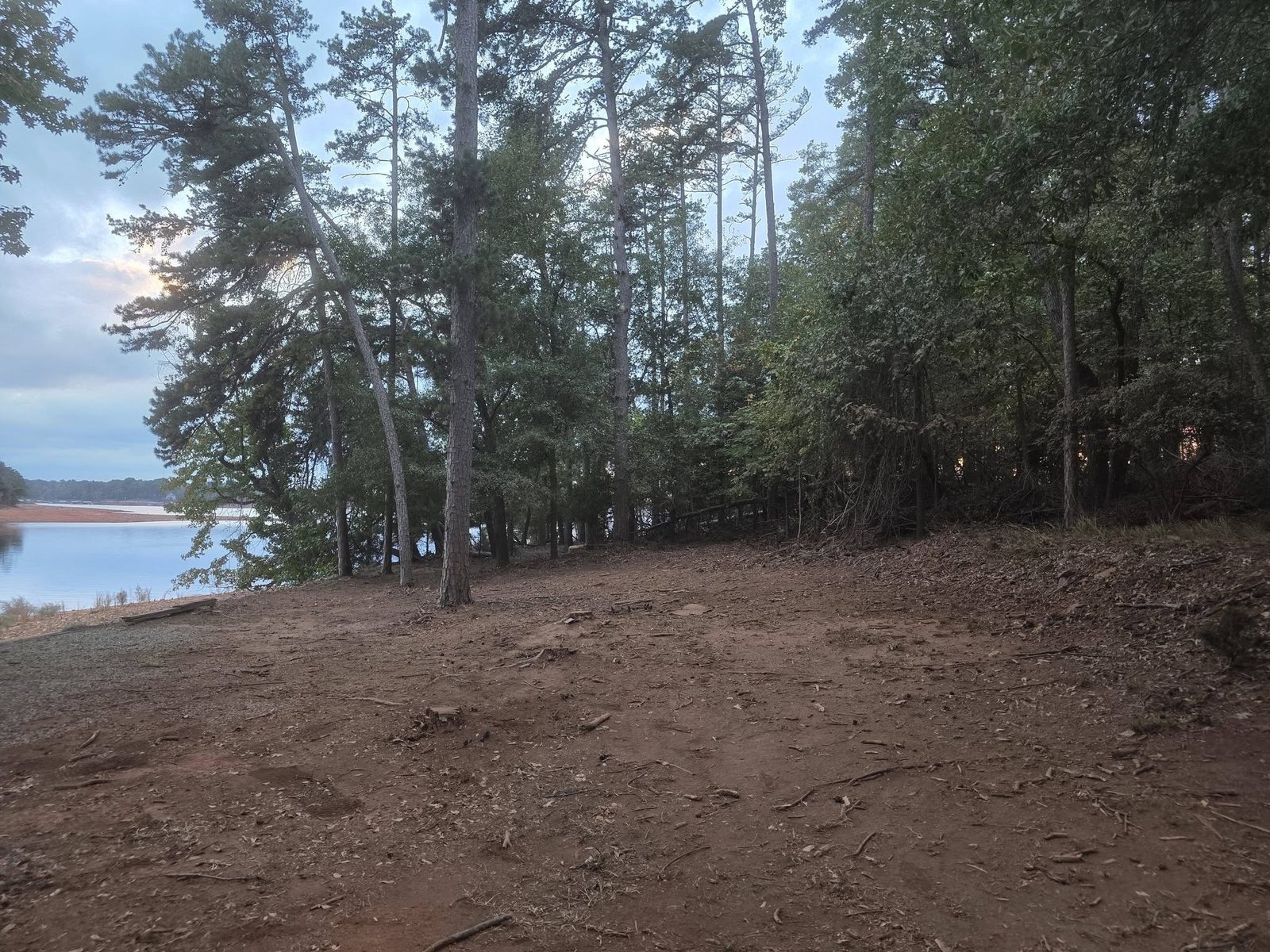
Stump grinding leaves a depression filled with wood chip grindings mixed with native soil. Greenville's Piedmont clay content means those grindings compact differently than they would in sandier Lowcountry soil — they hold moisture longer and settle more slowly. If you're planning to reseed or plant in that spot, mixing in fresh topsoil and giving the grindings at least one full growing season to begin breaking down produces better results than seeding directly into the chip pile.
Stump grinding in Greenville County typically doesn't require a permit — it's maintenance work, not construction. If you're in a neighborhood with an HOA, check covenants before the crew arrives; some require written approval for tree work. Historic districts within the City of Greenville may carry additional review considerations for significant trees. When in doubt, a call to your local planning office resolves it faster than a stop-work conversation after the grinder is running.