How Upstate Hardwoods Change What Adjusters Look For
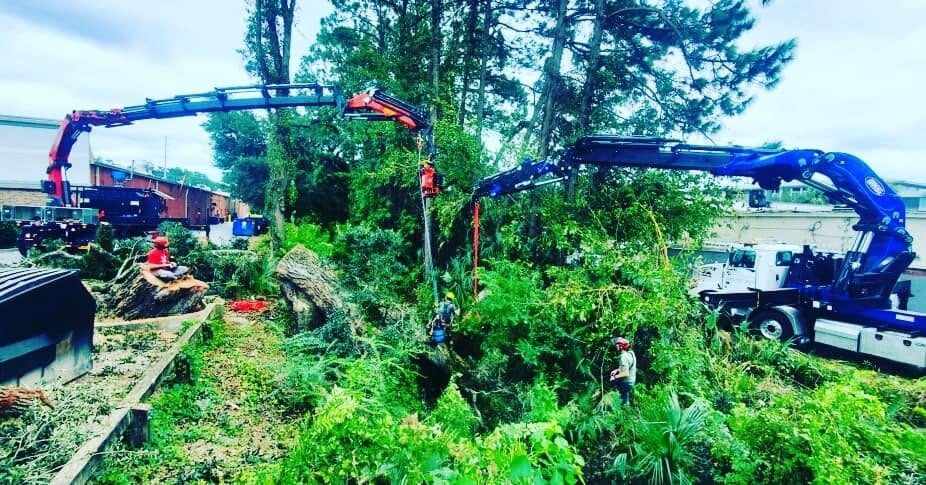
Pickens County sits at the foot of the Blue Ridge escarpment, and the hardwoods here — white oaks, tulip poplars, hickories, and black walnuts — root into thin soil overlying granite and gneiss. Unlike the longleaf and loblolly pines of coastal SC, which tend to snap cleanly at mid-trunk, these Upstate hardwoods can lever out of the ground root ball and all, or fail internally from rot while staying outwardly green. When one comes through a roof in Easley or on a ridge property off Highway 11, the debris is heavier, the structural penetration tends to be greater, and removal access on steep terrain adds complexity that flat-ground jobs do not have.
That failure pattern also changes what an adjuster scrutinizes. Pickens County has seen 23 federal disaster declarations over 2005-2026, most tied to the severe storms, flooding, and ice events that regularly load those foothills canopies. Ice loading is a particular Pickens County hazard: the county sits at an elevation where freezing rain events that pass over Greenville without consequence can coat trees here with an inch of ice, adding hundreds of pounds to limbs and crowns already weakened by a wet season. That storm history is real. But it does not automatically translate to a covered claim on any given event. The question every homeowners policy answers the same way is not whether a storm occurred — it is what the tree actually hit.
The Coverage Trigger: What SC Policies Actually Pay For
Standard SC homeowners policies use the HO-3 form, which covers the dwelling against named perils: wind, lightning, hail, and the weight of ice and snow. Tree removal becomes a covered expense only when two conditions are both true: a named peril caused the tree to fall, and the tree landed on a covered structure. The policy is not paying to clear your property of fallen timber; it is paying to remove the obstacle blocking repair of the structure it damaged. That boundary is where most disputes begin.
| Situation | Typically Covered? |
|---|---|
| Tree falls on house, storm-caused | Yes |
| Tree falls on detached garage or fence | Yes — check policy sublimits |
| Tree falls in yard, hits no structure | No |
| Tree blocks driveway only | Generally no |
| Dead or diseased tree falls | Likely denied |
| Neighbor's tree falls on your house | Your policy pays first |
Most policies impose a per-tree sublimit — commonly $500–$1,000 — for removal, separate from whatever the policy pays to repair the structure itself. If your house sustains $45,000 in structural work after a hardwood comes through the roof, the repair is covered up to your dwelling limit. The removal of that tree may be capped at $500 regardless of how large the debris field is or how difficult the access slope. For a realistic picture of what removal alone typically costs in Upstate SC, see the guide to emergency tree removal costs.
The Maintenance-Failure Trap: When Pre-Existing Decay Voids a Claim
Insurance covers sudden, accidental losses — not the foreseeable consequences of deferred maintenance. A dead or visibly declining hardwood that finally goes over in a storm puts adjusters in a very different position than a healthy tree snapped by a wind event. If there is evidence — from prior inspection records, neighbor statements, dated photographs, or publicly accessible aerial imagery — that the tree was diseased or structurally compromised before it fell, most carriers will deny the removal and repair claim as a maintenance failure rather than a storm loss.
The SC Forestry Commission provides forest health resources and can help identify hazard trees before they become a claim argument. Clemson's Home & Garden Information Center publishes guidance on identifying internal hardwood decay — the kind of fungal rot that leaves a tulip poplar looking green from the street until a storm snaps it at the root crown. In the rocky, slope-heavy terrain of the Pickens County foothills, shallow root systems can conceal internal failures that would be more apparent in deeper soil. Trees anchored into fractured granite shelf are likely to overturn intact rather than snap, which puts the full root ball on display in claim photographs — along with any rot at the root flare that an adjuster will read as prior knowledge on the homeowner's part.
A certified arborist inspection, documented and dated, is evidence that works in your favor: it establishes the tree was assessed as structurally sound, so if it fails later in a genuine storm, your carrier has less basis to argue you ignored a known hazard. If you are aware of declining trees near your home, addressing them before a weather event forces the question is both safer and cheaper than a denied claim.
Your Neighbor's Tree Comes Down: Who Pays First
When a neighbor's tree falls on your house, most homeowners expect the neighbor's insurance to respond first. Under SC common law, that is not the starting point. A property owner is liable for a neighbor's tree only if they received prior written notice that the tree was hazardous and failed to act on it. Without that documented notice, the owner of the damaged property carries the initial loss through their own homeowners policy. Your insurer may then pursue subrogation against the neighbor to recover what it paid out — but that is a legal process your insurer manages, not something you need to coordinate while dealing with structural damage and temporary repairs.
The practical takeaway: if you believe a neighboring tree poses a risk to your property, written notice sent to the neighbor — dated and kept with a copy — changes the legal calculus for any future loss. It also creates an opportunity to resolve the hazard before it ever becomes a claim. For what to do in the first hours after a tree comes through your roof, see the page on what to do when a tree falls on your house. When ice or wind events drop multiple trees across adjacent properties in the foothills — as they often do around Table Rock and in the river valleys outside Pickens — our storm cleanup guide covers how coordinated removal across property lines typically works.
Windstorm Deductibles, Documentation, and Filing the Claim Right
SC coastal counties carry mandatory wind and hail deductibles tied to named storms. Pickens County is not in that mandatory coastal zone, but many inland policies still carry a separate windstorm deductible written as a percentage of dwelling coverage — often 1–2%. On a home insured for $300,000, that equals $3,000–$6,000 out of pocket before the policy responds on a wind event, compared to a flat deductible of $1,000–$2,500 on most standard perils. The foothills see fast-moving straight-line wind and derecho-type events that never receive a named-storm designation; check whether your declarations page reads "windstorm" or "named storm" as the deductible trigger — the distinction determines which applies on those unnamed events.
When you file a claim and begin removal work, use a contractor licensed through the SC LLR Contractor Licensing Board. Unlicensed work complicates any supplemental claim you file later and can compromise warranty protections on structural repairs. Before moving any debris, document the scene: photograph the root ball and direction of fall, the contact point with the structure, and any visible internal decay at the failure point. That documentation answers the adjuster's first question before they arrive on site.
One common confusion in areas with active storm records: a FEMA federal disaster declaration for Pickens County and your homeowners insurance operate as entirely separate systems. A declaration opens eligibility for federal assistance programs designed to address losses your insurance does not cover — it does not supplement your insurance payout or trigger additional payments. File your insurance claim on its own timeline and treat any FEMA process as a parallel, independent track.